
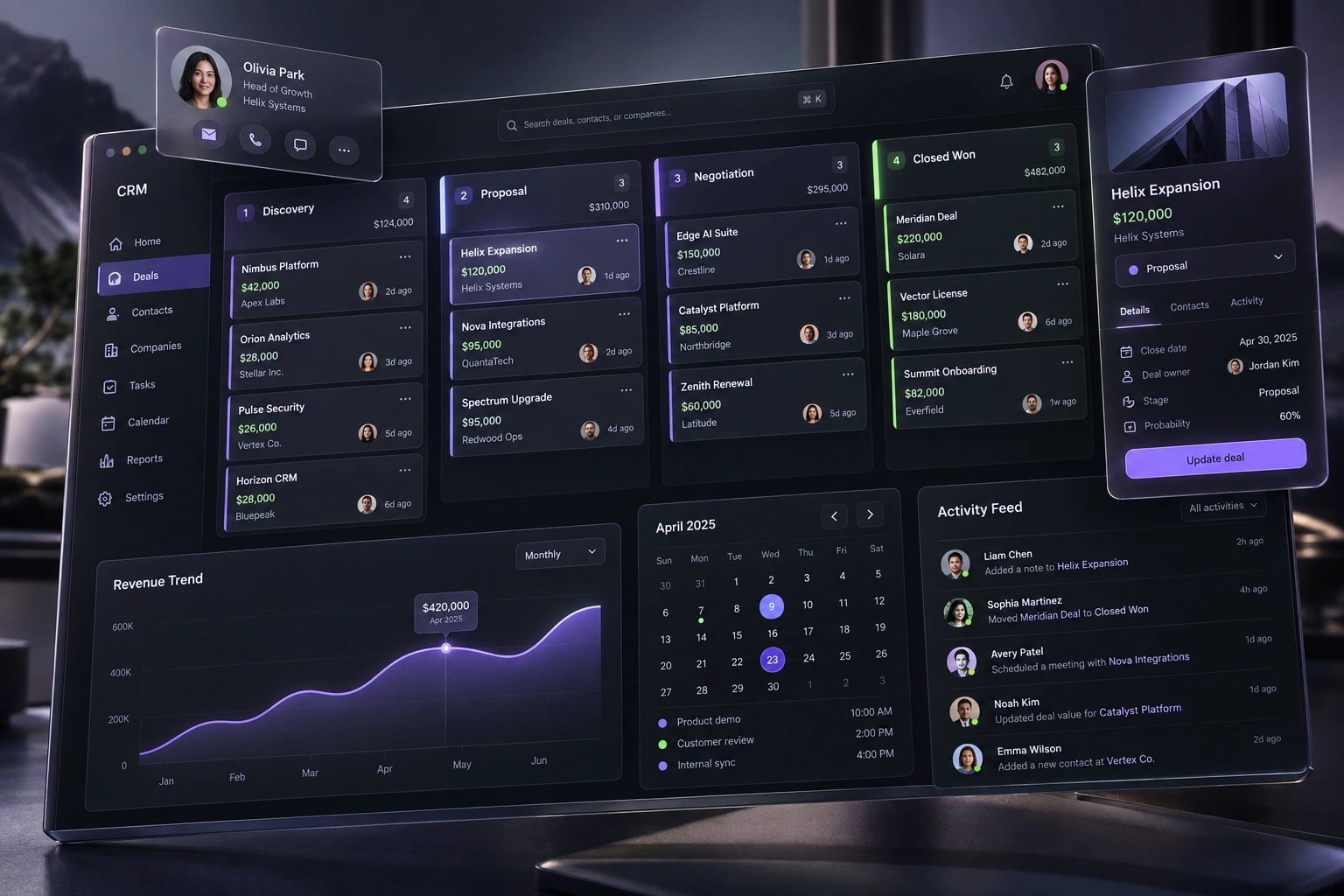
Choose a ready-made CRM when your process is standard. Choose custom when your competitive advantage depends on workflows, approvals, data or integrations that generic software keeps fighting.
Put this guidance into practice
Explore our custom CRM and ERP development, software development, application launch, premium website development and business automation services. We scope the work around your existing tools, team and goals.
The decision is not software versus software
The useful question is not which CRM has the longest feature list. It is whether your revenue process can fit a standard operating model without creating workarounds for the team.
A ready-made CRM can be the fastest route to disciplined lead capture, follow-ups and basic reporting. A custom CRM becomes valuable when the handoffs between sales, quotation, inventory, service, finance or production are specific to your business.
- Use ready-made CRM for standard pipelines and quick adoption
- Consider custom CRM when spreadsheets still bridge critical departments
- Measure the cost of duplicate entry, missed handoffs and manual reporting
Signals that standard CRM is still enough
Standard software is usually the better first move when the team mainly needs contact management, a clean pipeline, reminders and common integrations. Configuration is cheaper than custom engineering and proven workflows can improve a young sales process.
Do not build custom software merely to copy features that already exist. The business case should come from operational leverage, clearer accountability or a customer experience that a standard setup cannot deliver.
- Your pipeline stages are conventional
- The required integrations are already supported
- Users can work without parallel spreadsheets
- Reports answer management questions without manual reconciliation
When custom CRM creates real leverage
Custom CRM earns its place when the system must reflect unique roles, approval rules, pricing logic, service journeys or operational dependencies. In that situation, the CRM is no longer only a sales database; it becomes part of the company’s operating system.
Start with one high-friction workflow instead of commissioning every imaginable module. Map ownership, exceptions, permissions and success metrics, then ship in releases that users can validate.
- Connect enquiry to quotation, order and fulfilment
- Automate role-specific tasks and escalations
- Create one customer view across sales and service
- Build dashboards from trusted operational data
A sensible selection process
Document the current workflow before evaluating tools. List the decisions users make, the data each decision needs and the failures that cost time or revenue. Then compare configuration, integration and custom-build options against the same requirements.
DigiStartup India designs custom CRM and ERP systems around real workflows. A focused discovery session can identify whether you need configuration, integration or a purpose-built system before a larger investment is made.
Further reading
Frequently asked questions
How much does a custom CRM cost in India?+
Cost depends on users, modules, integrations, permissions and migration complexity. A focused workflow can start smaller, while multi-department CRM or ERP systems require a larger phased investment after discovery.
Can a custom CRM integrate with WhatsApp, email and accounting tools?+
Yes, when the relevant providers offer suitable APIs and account permissions. Integration scope should include message ownership, consent, data mapping, error handling and reporting.
Should a small business build a custom CRM?+
Only when a specific workflow creates enough recurring value to justify it. Many small teams should begin with configured standard software and move to custom development after their process stabilises.