CUSTOM BUSINESS SOFTWAREEXAMPLE 1
CUSTOM BUSINESS SOFTWARE
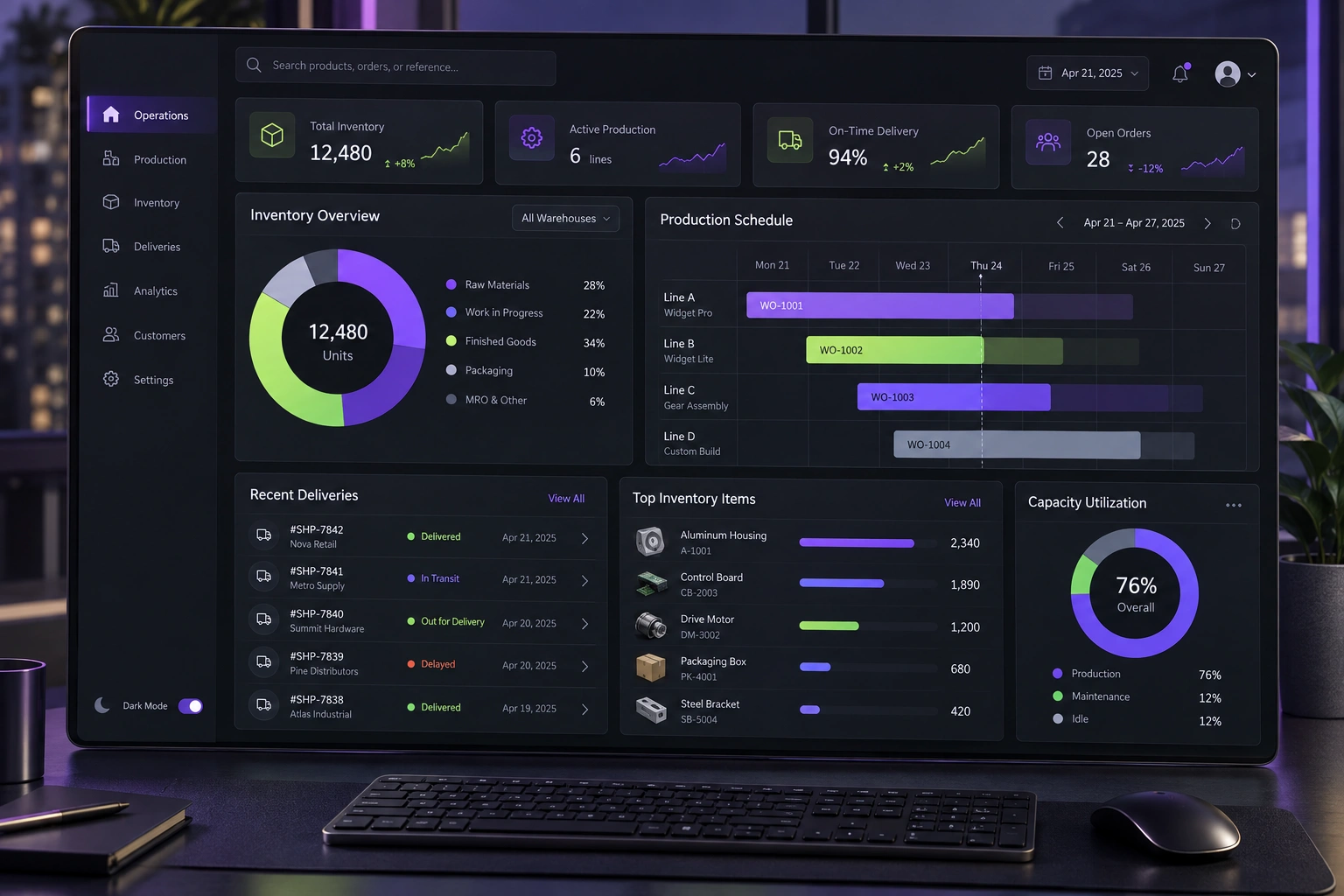
An operational dashboard bringing schedules, inventory and delivery information into one clear workspace.
 DIGISTARTUPINDIA
Customer portals, vendor platforms, internal tools and web applications engineered for reliability, speed and future growth.

This example separates the user interface, application logic and storage into connected layers.
These sample screens show possible features and layouts. Your system will be designed around your team, daily tasks and business information.
An operational dashboard bringing schedules, inventory and delivery information into one clear workspace.
We agree on the features you need before work starts and plan for future additions.
Define how web applications should work, who owns it, what can fail and how the result will be accepted.
Map the record, stages, owners, permitted actions and exception paths around the way the team actually works.
Give the operating team controlled tools to update content, manage records and complete routine work without developer access.
Define the source of truth, access method, field mapping, retries and ownership when either system is unavailable.
Give each role the information and actions it needs while protecting privileged or sensitive operations.
Agree the business question, source data and decision owner before designing the dashboard or event model.
Define provider states, reconciliation, access and recovery so payment information remains operationally reliable.
Prepare accounts, release ownership, analytics, support and rollback decisions before the public launch window.
Make failure visible, assign the response and document recovery instead of leaving the workflow silently broken.
We focus on helping your team work efficiently and making it easier for customers to use your services.
Plan the application around expected users, data volumes and likely growth. Separating responsibilities in the system makes it easier to expand specific areas, with capacity decisions guided by testing rather than assumptions.
Make common actions straightforward and give users clear feedback while work is in progress. We review loading, success and error states so the application feels responsive even when a request takes time.
Define how information moves between users, the application and connected services. Authentication, permissions and input validation are planned around the data involved, with sensitive operations handled on the server.
Provide clear descriptions of agreed integration endpoints, required inputs and expected responses. Documentation also explains authentication and common errors so future developers can connect to the system with less guesswork.
Keep planned changes, testing progress and deployment steps visible to your team. You can review what is ready, what needs a decision and what is included in each release before it goes live.
Organise the code into understandable components with consistent conventions and tests for important behaviour. This helps future developers make changes without having to rediscover how the entire application works.
Users, jobs, constraints and success metrics.
Experience, data model and system boundaries.
Build in stages with agreed requirements and testing.
Observe usage, optimize and expand safely.
Indicative bands help qualify fit; the proposal is based on the agreed scope, integrations and delivery responsibility.
Map users, workflows, risks, evidence and the strongest first release before committing to a larger build.
Design, engineer and validate one coherent release with named milestones, acceptance checks and weekly visibility.
Maintain, observe and improve the released system through an agreed monthly capacity and priority queue.
Written decisions, scheduled reviews, timezone-aware meetings and documented handover keep international work visible.
SEE HOW REMOTE DELIVERY WORKSWe build customer and vendor portals, internal tools, admin consoles, workflow platforms, analytics interfaces and integration-led business applications.
Yes. Engagements can include product framing, UX flows, interface design, data architecture, APIs, engineering, deployment and post-launch improvement.
Yes, when the existing products provide suitable APIs or supported integration methods. We assess data ownership, permissions, failure handling and operational responsibility during discovery.