
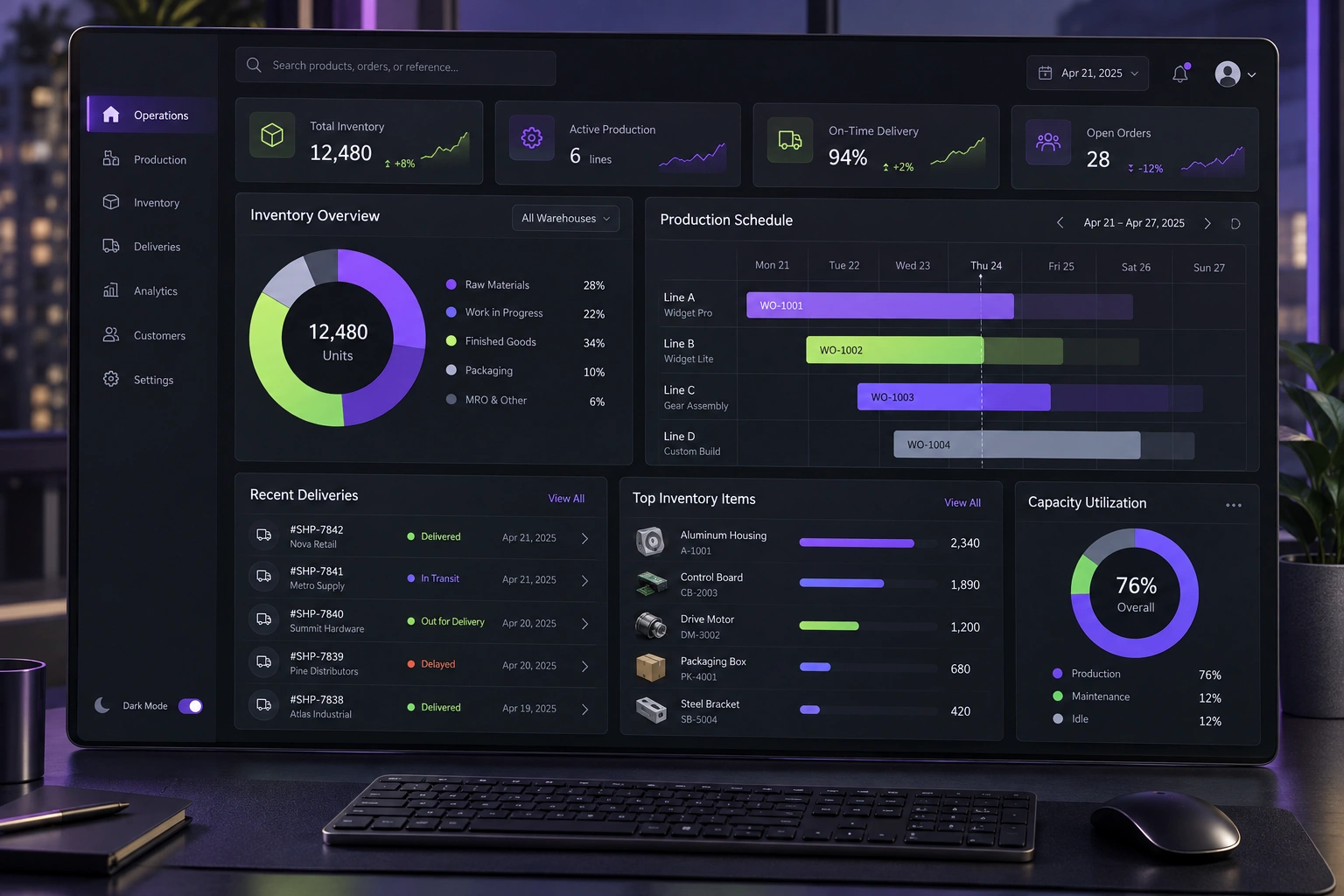
Evaluate the way a partner understands decisions, demonstrates working software, manages risk and leaves you in control. A polished proposal matters less than clear ownership, reviewable evidence, secure delivery practices, realistic commercial boundaries and a credible handover plan.
Put this guidance into practice
Explore our custom CRM and ERP development, software development, application launch, premium website development and business automation services. We scope the work around your existing tools, team and goals.
Test how the team understands the problem
A serious evaluation should begin before anyone promises a feature list or delivery date. Give each potential partner the same short brief: the business problem, intended users, current workaround, important constraints and the decision the first release must support. Then compare the questions they ask.
Strong discovery separates confirmed requirements from assumptions. The team should ask about users, operational handovers, sensitive data, integrations, exception cases and who can make scope decisions. Be cautious when a supplier converts a short call directly into a fixed technical solution without checking the work behind the interface.
GOV.UK's agile delivery guidance describes discovery, alpha, beta and live as different stages of learning and delivery. You do not need to copy those labels, but the principle is useful: ask what evidence is needed before committing to architecture, scope and launch.
- Can the team restate the business outcome in plain language?
- Do they identify assumptions and decisions that need evidence?
- Do they ask about staff workflows and failure cases as well as screens?
- Can they explain what should be discovered before an estimate becomes a commitment?
Ask for evidence you can examine, not a presentation you can only admire
Request a walkthrough of relevant work. The partner should explain the problem, its own responsibility, the difficult trade-offs, how acceptance was tested and what changed after feedback. A gallery of attractive screens does not prove that the team handled permissions, integrations, data migration or production support.
Real client work may be confidential. That is reasonable. The team can still demonstrate its approach with redacted artefacts, a controlled product example, public work, sample acceptance criteria or a small technical exercise. Do not pressure a supplier to expose another customer's data or private source code.
Look for consistency between the claim and the evidence. If a partner promises senior engineering, ask who will actually review architecture and code. If it promises reliable delivery, ask to see how work moves from requirement to review, test, release and support.
- A problem-to-outcome walkthrough with the partner's role made clear
- Examples of decisions, acceptance criteria and change records
- A demonstration of working behaviour, including an error or exception
- Named people who will perform and review the work
Make remote communication observable
Remote delivery works when the project has a visible operating rhythm. Agree the channels for decisions, questions, demonstrations, urgent incidents and formal approvals. A daily message count is not evidence of progress; reviewed working software and resolved decisions are.
Ask for a sample two-week cadence. It might include backlog clarification, short progress updates, a working-software review and a written decision log. The exact method can vary, but you should know what will be visible, who attends and how a blocked decision is escalated across time zones.
Confirm language, working-hour overlap and response expectations. Separate normal response targets from genuine production incidents. This avoids treating every message as urgent while ensuring that important failures have a named route.
- One place for scope and acceptance decisions
- Regular demonstrations using the current build
- A visible list of risks, blockers and owners
- Working-hour overlap and escalation expectations
- Written confirmation of decisions that change cost, scope or launch
Evaluate engineering and security as a system
Do not reduce technical evaluation to a list of programming languages. Ask how the team reviews changes, protects access, tests critical journeys, manages dependencies, separates environments, handles secrets, releases safely and responds to a vulnerability after launch.
NIST's Secure Software Development Framework groups secure development around preparing the organisation, protecting software, producing well-secured software and responding to vulnerabilities. It is deliberately outcome-focused, which makes it useful when asking a supplier how its real process addresses security rather than whether it recognises a collection of tool names.
Repository controls can provide practical evidence. GitHub documents branch protection, required reviews and status checks, while dependency review can surface security and licence implications when packages change. The tools may differ, but the partner should be able to explain equivalent controls and who can bypass them.
- Code review and automated checks before release
- Least-privilege access and a process for removing access
- Dependency, secret and vulnerability handling
- Backup, rollback, monitoring and incident ownership
- A clear route for reporting and correcting security issues
Read the commercial model as carefully as the proposal
Compare what is included, assumed and excluded. A low headline estimate can hide content preparation, integrations, data migration, cloud costs, testing, store submissions, analytics, training or post-launch support. Ask how estimates change when an assumption is wrong.
Fixed scope can work when acceptance criteria and dependencies are understood. A time-based engagement can work when priorities need to evolve and spending is visible. Neither model protects you from vague decisions. Define review points, approval authority, invoicing evidence and the conditions for pausing or ending the work.
Confirm ownership and portability in writing: source code, design files, infrastructure configuration, domains, third-party accounts, data exports, documentation and credentials. Your organisation should not discover at handover that essential accounts belong only to a supplier employee.
- Deliverables, acceptance criteria and exclusions
- Assumptions about client content, access and decisions
- Change-control and spending approval process
- Intellectual property, third-party licences and account ownership
- Support scope, response boundaries and exit terms
Use a small paid engagement to test the relationship
When the decision is important, a short paid discovery or bounded technical exercise is more informative than an unpaid pitch. Choose a real uncertainty: map one workflow, validate an integration, prototype a difficult interaction or prepare a release plan. Define the output and decision before it begins.
Review whether the team made risks clearer, involved the right people, showed unfinished work honestly and left usable artefacts. The goal is not to obtain free production work; it is to see the delivery behaviour that a longer engagement will depend on.
DigiStartup India works remotely with Indian and international teams on custom CRM, business software, applications and premium websites. A first conversation can focus on one workflow, the evidence you already have and the delivery decision you need to make.
- A real, bounded question with a named decision owner
- An agreed output such as a workflow map, prototype or technical finding
- A review of communication, reasoning and artefact quality
- A clear recommendation, risks and next-step options without forced commitment
Further reading
Frequently asked questions
Should I choose a software partner based on an hourly rate?+
No. Compare the complete delivery model: senior involvement, discovery, quality controls, communication, infrastructure, testing, support, change handling and the work your own team must provide. A lower rate can still produce a higher total cost when ownership or rework is unclear.
Is a technical trial project reasonable?+
Yes, when it is paid, bounded and tied to a genuine uncertainty. Define the output and evaluation criteria. Do not expect a supplier to build valuable production features for free or expose another client's confidential work.
What should remain under my company's control?+
Keep organisational control of domains, cloud and store accounts, analytics, source repositories or agreed mirrors, billing relationships, data exports and recovery access. Give the delivery team only the permissions it needs and document the handover.
How can I judge progress with a remote development team?+
Use a regular working-software review, written acceptance criteria, a visible decision and risk log, automated quality evidence and a clear release history. Activity reports are less useful when they cannot be connected to a demonstrable outcome.